Tree Roots in Sewer Pipes: Signs, Repair Options and When Relining Makes Sense
A drain that keeps blocking, gurgles or drains slower each month may have tree roots in it. This guide explains how to confirm it, what the repair options are, and what to ask before you agree to any work.
The short answer
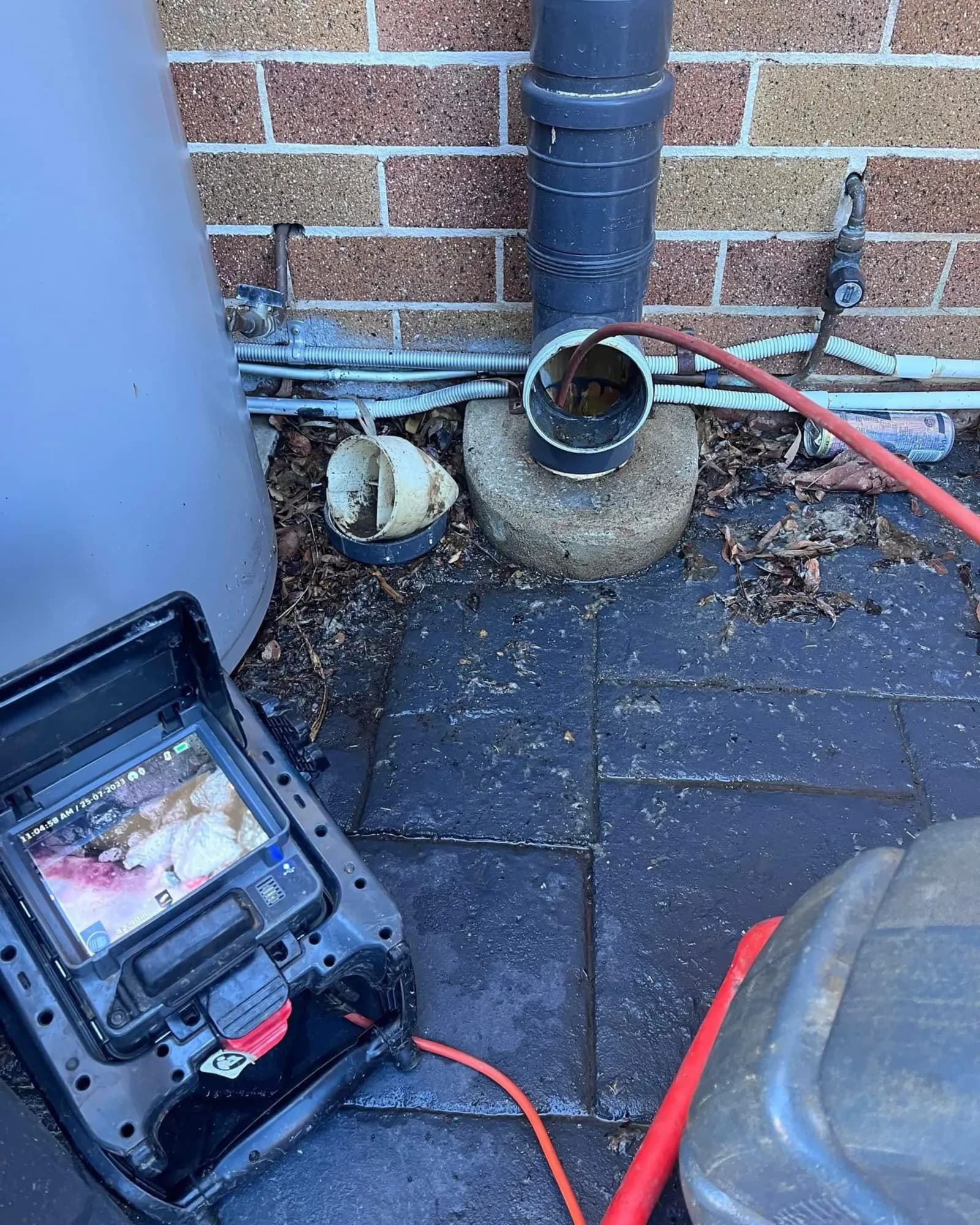
Tree roots in pipes usually show up as slow drains, a gurgling toilet or a blockage that keeps coming back. Roots get in through cracks, loose joints and badly laid pipe. A licensed plumber or drainer confirms it with a drain camera, then clears the roots. The camera footage decides the next step: ongoing maintenance clearing, relining the damaged section, or digging up and replacing the pipe.
On this page
- Are tree roots in your pipes?
- Signs of tree roots in your drains
- Why roots get into pipes, and why older south-east Queensland homes are prone to it
- Confirming it: what a CCTV drain camera inspection shows
- Your options: root cutting, jetting, relining and pipe replacement
- Pipe relining explained: how it works, where it suits and where it doesn't
- Relining vs digging up and replacing: what affects the job
- Whose roots, whose pipe? Your drain, the utility sewer and neighbours' trees
- Preventing roots coming back: tree placement, maintenance clearing and barriers
- Frequently asked questions
Are tree roots in your pipes?
If a drain blocks again a few months after it was cleared, tree roots are a likely cause. Redland City Council lists tree roots entering and growing inside pipework as a common cause of blockages and overflows. Roots do not usually break into a sound pipe. They find a way in where a pipe is damaged or was laid badly, then grow inside it and catch paper and grease until the line slows or stops.
The usual path runs in three steps. First, a licensed plumber clears the line so it flows again. Second, a camera goes through the pipe to show where the roots are getting in and what condition the pipe is in. Third, you choose a fix based on that footage. For a broader look at causes other than roots, see the blocked drain guide.
Signs of tree roots in your drains
The signs of tree roots in a drain are the same as any sewer blockage, but they tend to build slowly and come back after clearing. Redland City Council lists slow drainage in sinks, the shower or bath, and gurgling noises from the toilet or floor drains as signs of a sewer blockage. Watch for these:
- Several fixtures draining slowly at once, not just one sink.
- The toilet gurgling or the water level rising when you flush.
- The overflow relief gully outside lifting its grate or spilling after heavy water use.
- A blockage that returns weeks or months after the drain was cleared.
- A large tree, palm or thick shrub growing near where the drain runs.
One slow fixture points somewhere else. Redland City Council says that if only one sink or toilet is draining slowly or blocked while everything else works fine, the problem is most likely in your home's plumbing. A blocked toilet on its own is often something stuck in the bend, not roots in the line.
Why roots get into pipes, and why older south-east Queensland homes are prone to it
Roots get into pipes because a pipe with a gap leaks water and nutrients into the soil, and roots grow toward that water. Redland City Council explains that tree roots may damage stormwater pipes when pipes are incorrectly installed or have been damaged, allowing water and nutrients to be absorbed by the surrounding soil. Trees then focus root growth there and eventually into the pipe.
Ground movement plays a part too. The QBCC says most Queensland homes are built on clay soils that dry out rapidly in dry seasons and become wet quickly in wet seasons. That swelling and shrinking is written about for footings, but it is reasonable to expect older drains laid in the same ground to feel some of that movement at their joints.
Root reach is often underestimated. QBCC guidance says a tree root system searching for water can spread sideways about as far as the tree is tall, and up to twice that for trees in rows or groups. A tree well away from the house can still reach the drain line.
Confirming it: what a CCTV drain camera inspection shows
A CCTV drain camera inspection is how you confirm roots, because it shows the inside of the pipe instead of guessing from the symptoms. Redland City Council advises using a plumber who has jet rodding and a pipe inspection camera (CCTV) for a sewer blockage. The camera is pushed through the line from an access point and records what it passes.
Ask to see the footage, or ask for a copy. A drain camera inspection can show:
- Fine roots coming in at one or more joints.
- A thick root mass filling the pipe.
- A cracked, offset or sagging section where water sits.
- A broken or collapsed length of pipe.
- Whether the problem is on your side or past the connection to the sewer main.
The last point matters. Redland City Council says a blockage within your property needs a plumber to inspect your plumbing first and confirm it is not on your side. If the footage shows the blockage is in the council main, the fix and the bill may belong to someone else.
Your options: root cutting, jetting, relining and pipe replacement
The right repair for tree roots depends on what the camera finds, not on the roots alone. Clearing the roots gets water flowing again, but the gap that let them in stays open. The table below matches common camera findings to the options a plumber is likely to discuss. It compares the factors and does not pick a winner, because each drain is different.
| Camera finding | Options to discuss | What affects the job |
|---|---|---|
| Fine roots at one or two joints, pipe otherwise sound | Clear the roots by cutting or jetting, then monitor with regular maintenance clearing | How fast the roots return, how many joints are affected, whether the tree stays |
| Roots at a few joints in one short section | Clear, then patch reline that section | Access to the section, pipe size, how many joints are involved |
| Roots at many joints, cracked or offset pipe along the run | Clear, then reline the full length | Length of the run, bends and junctions, pipe material and diameter |
| Collapsed, crushed or badly sagging section | Dig up and replace that section, sometimes combined with relining elsewhere | Depth, what is built over the pipe, driveways, slabs and gardens in the way |
| Blockage past your connection, in the main | Report to the council or utility | Who owns that part of the network |
Pipe relining explained: how it works, where it suits and where it doesn't
Pipe relining puts a new lining inside the old pipe so the joints and cracks that let roots in are sealed over. One manufacturer, Nuflow, describes its relining product as creating a pipe within a pipe, with an epoxy liner that bonds to the old pipe's interior wall. Its process starts with a camera inspection to find the location and cause of failure, then the pipe is cleared and cleaned with high-pressure jetting and tools before the liner goes in.
The same manufacturer says its liner can be fitted through bends, branches and changes in pipe diameter from existing access points, in pipes including clay, concrete, iron and PVC, and can start and stop at any point for patch lining. Those are one manufacturer's claims about its own product. Other systems and installers differ.
Relining tends to suit a pipe that still holds its shape, has roots at the joints, and runs under something you would rather not dig up. It may suit less well where a section has collapsed, sags badly or has been crushed, because the liner follows the old pipe's path. Whether relining suits your drain is a call for the licensed plumber who has seen the footage.
Relining vs digging up and replacing: what affects the job
Neither relining nor replacement is right for every drain. The choice comes down to the pipe's condition and what sits on top of it. Without giving any figures, these are the things that change the size of the job:
- Length of pipe affected, and whether it is one patch or the whole run.
- Depth of the drain and how much digging replacement would need.
- What is above it: a driveway, slab, deck, pool surround or established garden.
- Junctions, bends and changes in pipe size along the line.
- Whether a section has collapsed or sags and needs digging up either way.
- Access points, and whether a new inspection opening is needed.
Before you agree to relining, ask the plumber these questions. Can I see the camera footage before and after? Which sections will be lined, and why those? How will the junctions be handled? What warranty applies to the work and the liner? What compliance paperwork will I receive? Under Queensland rules, the QBCC says notifiable work includes most work performed in existing buildings and is registered with the QBCC when finished, so ask whether your job needs it. You can check a plumber's licence online or by calling the QBCC on 139 333.
Whose roots, whose pipe? Your drain, the utility sewer and neighbours' trees
In south-east Queensland, the house drain on your land is generally yours to maintain, and the sewer main belongs to the water service provider. Redland City Council says customers must maintain the internal plumbing on their property, including preventing tree root intrusion, and all wastewater pipes within the property to the inspection opening. In Logan, Council's blocked house drain procedure says its ownership ends at the first inspection opening of the property connection, and asks you to call a licensed plumber first for a problem in the pipes on your property. In Brisbane, Urban Utilities says it operates the sewerage service from the property connection point.
A neighbour's tree is a different question. Tree disputes, including roots damaging property, fall under the Neighbourhood Disputes (Dividing Fences and Trees) Act 2011 and are decided by QCAT. Logan City Council suggests talking to your neighbour first, and says the Dispute Resolution Centre may help with mediation. For a Council tree in the Redlands, you need Council permission before cutting its roots out of stormwater pipes on your property.
Preventing roots coming back: tree placement, maintenance clearing and barriers
Preventing roots coming back starts with closing the gap they used and keeping thirsty trees away from drain lines. Urban Utilities asks customers to check for pipes before planting and to choose trees with root systems less likely to enter pipes. The QBCC advises planting trees that need a lot of water well away from your home. Logan City Council also says not to plant trees and shrubs over or close to your overflow relief gully.
If the pipe is not repaired, regular maintenance clearing keeps roots short before they block the line. Root barriers are another option a plumber or landscaper may raise for a tree you want to keep.
Take care with the tree as well. Redland City Council warns that cutting roots too close to the trunk may affect the tree's stability and could lead to whole tree failure. A smell around the drains can point to a related problem, covered in smelly drains and sewer flies.
To have a root-blocked drain looked at in the Redlands or Logan, see our blocked drain services or our page on blocked drains in Capalaba. Call Jim Monger Plumbing and Gas on 0418 871 269. QBCC licence 15504687.
Frequently asked questions
Do chemical root killers from the hardware store work?
Chemical root killers do nothing about the crack or loose joint that let the roots in, so roots can return through the same gap. A camera inspection tells you whether the pipe needs clearing, relining or replacing, which a chemical cannot.
Is root damage in sewer pipes covered by home insurance?
It depends entirely on your policy. Read the product disclosure statement for your policy and ask your insurer directly before work starts. Keep the camera footage and the plumber's written report, because an insurer is likely to ask what caused the damage and where.
How long does pipe relining last?
How long a relined pipe lasts depends on the liner system, how well it was installed, and the condition of the old pipe around it. Manufacturers and installers each set their own warranty terms, so ask the plumber in writing what warranty covers the liner material and what covers the installation. Ask for the before and after camera footage too, so you have a record of the work.
Can relining be done if the pipe has collapsed?
Sometimes, but not always. Nuflow, one relining manufacturer, says its liner can provide structural repair even where a section of pipe is missing. In practice, a badly collapsed, crushed or sagging section may still need to be dug up and replaced, sometimes with relining used on the rest of the run. The licensed plumber who has seen the camera footage is the one to make that call.
Which trees are worst for drains?
Trees with big, thirsty root systems pose the most risk near a drain line. A QBCC guide to preventing structural damage lists trees such as figs, willows, poplars, palms and several gums among those to keep well away from the house. That list is written for footings, but it is a sensible planting guide near drains too. Check where your pipes run before you plant anything large.
How often should a drain with roots be cleared?
There is no fixed timetable. It depends on the type of tree, how close it is, the season and how many joints the roots are using. A plumber can judge it from the camera footage and how quickly the drain slowed last time. If you need clearing again and again, ask whether relining or replacing the affected section would end the cycle.
Where to next
- Read next: Blocked drains: causes and what to do
- Need it fixed: Blocked drains, or call 0418 871 269
Sources
- Sewer blockages, Redland City Council. Accessed 28 October 2026.
- Council trees, Redland City Council. Accessed 28 October 2026.
- Water and Wastewater Customer Commitment Statement 2025, Redland City Council. Accessed 28 October 2026.
- Clearing Blocked House Drains on Private Property (procedure), Logan City Council. Accessed 28 October 2026.
- Sewage overflow, Logan City Council. Accessed 28 October 2026.
- Neighbourhood trees, Logan City Council. Accessed 28 October 2026.
- Residential Customer Charter, Urban Utilities. Accessed 28 October 2026.
- Regulated plumbing work requirements, Queensland Building and Construction Commission. Accessed 28 October 2026.
- Protect against subsidence, Queensland Building and Construction Commission. Accessed 28 October 2026.
- Guide to preventing structural damage, Queensland Building and Construction Commission. Accessed 28 October 2026.
- Plumbing laws, Queensland Government. Accessed 28 October 2026.
- Blueline pipe relining, Nuflow. Accessed 28 October 2026.