
Burst pipe? What to do in the first 30 minutes, and how to spot one underground
A burst pipe is stressful, but the first steps are simple and in your control. Here is the order to do them in, and how to tell whose pipe it is.
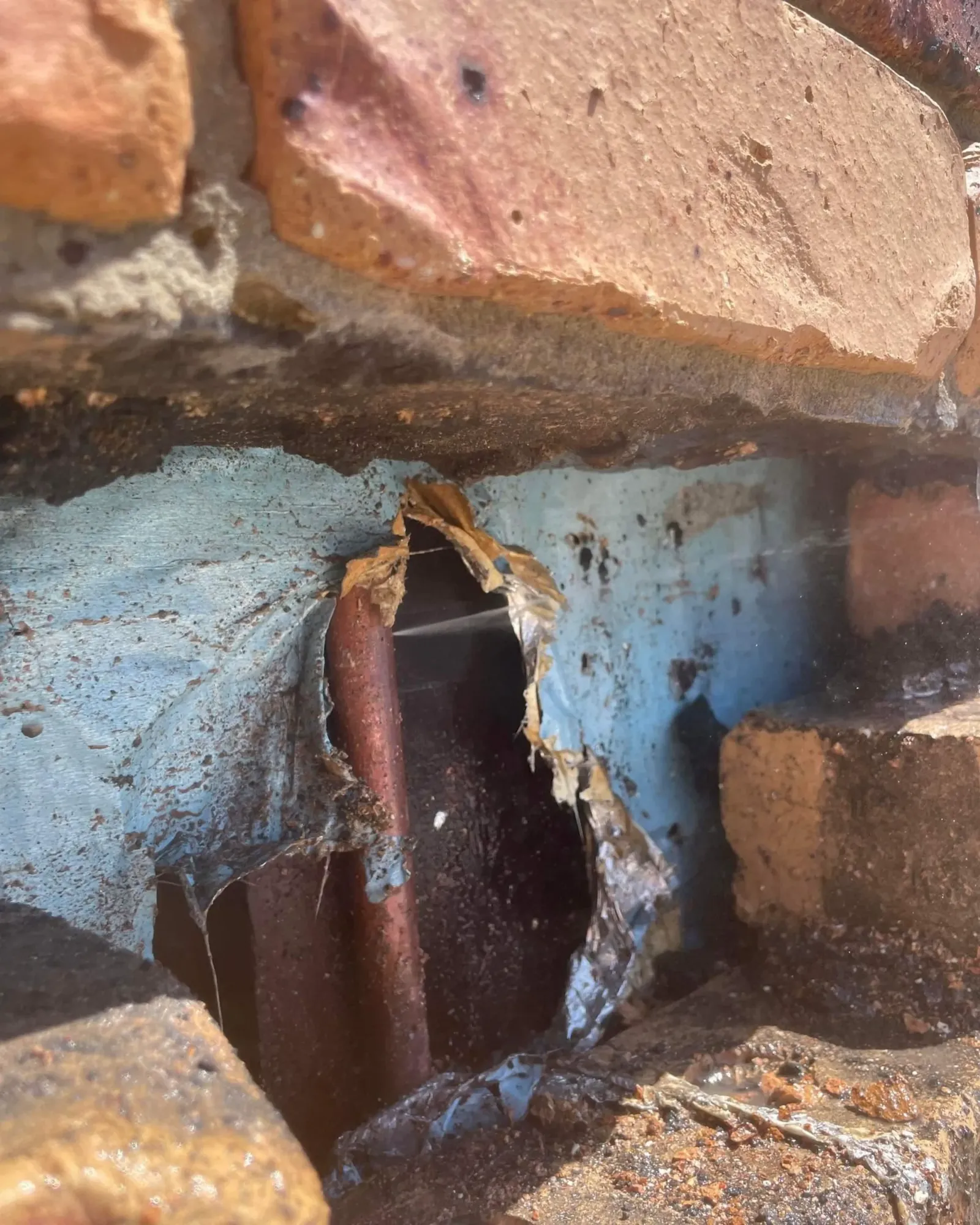
The short answer
Turn the water off at the stop tap on your water meter, usually near the front boundary. If water is near power points, lights or the switchboard, keep clear and only switch the power off if you can reach the switchboard without touching water. Then contain the water, photograph the damage and call a licensed plumber. A leak on the street side of the meter goes to your water provider instead.
On this page
- What to do if a pipe bursts, in order
- Step 1: Turn off the water at the meter
- Step 2: Make it safe: electrics, hot water system and ceilings
- Step 3: Limit the water damage and record it for insurance
- Is it your pipe or the water provider's? Who to call in Redlands, Logan and Brisbane
- Signs a pipe has burst underground or inside a wall
- Why pipes burst in south-east Queensland
- What you can and can't do yourself under Queensland plumbing law
- What happens when the plumber arrives
- Frequently asked questions
What to do if a pipe bursts, in order
If a pipe bursts, work through six steps in order: water off, electrics safe, hot water off, water contained, damage recorded, plumber called. Doing them in this order stops the flow first and keeps you away from the biggest risk, which is water meeting electricity.
- Turn off the water at the stop tap on the water meter.
- If water is near power points, lights or the switchboard, keep clear. Switch the power off only if you can reach the switchboard from a dry spot.
- Ask the plumber whether to switch off the hot water system while the water is off.
- Move belongings out of the way and soak up or catch what water you safely can.
- Photograph the burst, the damage and the meter reading.
- Call a licensed plumber, or your water provider if the leak is on the street side of the meter.
Step 1: Turn off the water at the meter
The stop tap on the water meter shuts off water to the whole property, so it is the first thing to find. In Redland City, meters on connections installed since the early 2000s sit just inside the property line, about 0.5m back and 0.5m from the left or right boundary. Older meters may sit further along, generally in line with the side of the house or the outside tap, according to Redland City Council.
In Logan, most meters are on the nature strip outside the front of the property, under the lid of a meter box. Logan City Council recommends wearing gloves and lifting the lid carefully, because meter boxes can be home to spiders and snakes.
If the stop tap is stiff, don't force it with tools or strike the meter. The meter belongs to the water provider, and Redland City Council says it may recover the reasonable cost of repairing damage to its meters from the property owner. If you can't find the stop tap or it won't turn, tell the plumber when you call.
Step 2: Make it safe: electrics, hot water system and ceilings
Electrical safety comes before mopping. Queensland's Electrical Safety Office says to stay away from and not touch switchboards damaged by water, and to warn others. That advice is written for storms, and the same caution applies to water from a burst pipe.
Only switch the power off at the switchboard if you can reach the board while standing somewhere dry, without touching water. If water is running through light fittings or the switchboard is wet, leave the area and get help. Have a licensed electrician check any water-damaged hard-wired appliance before you use it again.
Ask the plumber on the phone whether to switch off your hot water system. Rinnai's manual for its Hotflo electric storage range says the switch is usually marked and located in the electricity meter box; check the manual for your own unit. For a gas unit, leave it to a licensed gasfitter. If the water is coming from the hot water unit itself, read what to do when a hot water system is leaking.
If a ceiling is sagging, bulging or dripping, keep people and pets out of the room below and don't push on it.
Step 3: Limit the water damage and record it for insurance
Limiting water damage means moving what you can, catching what you can and photographing everything before you throw anything out. Do this only once the water is off and there is no electrical risk in the room.
- Lift rugs, furniture, boxes and electronics off wet floors.
- Catch drips with buckets and soak up pooled water with towels.
- Open windows and doors so wet areas can start to dry.
- Photograph the burst pipe, the water and every damaged wall, floor, ceiling and item.
- Photograph the water meter reading, so there is a record of the date and the figure.
- Keep the plumber's invoice and any report on what was found and repaired.
The Insurance Council of Australia gives advice for disaster claims that is useful here too: contact your insurer immediately, take photos before removing soaked items, don't throw away goods that could be salvaged or repaired, and speak to your insurer before authorising building work, including emergency repairs. What your policy covers depends on its wording, so ask your insurer. A plumber's paperwork can matter beyond insurance: in Redland City, a concealed leak remission application needs proof via a plumber's invoice or report.
Is it your pipe or the water provider's? Who to call in Redlands, Logan and Brisbane
The water meter is the dividing line: pipes on the property side are the owner's to repair, and pipes on the street side belong to the water provider. Redland City Council says all pipes on the property side of the meter are the owner's responsibility. Logan City Council repairs leaks from its supply system up to and including the meter, and leaks from pipes and fittings on the property side are the owner's responsibility.
| Where the water is | Whose pipe | Who to call |
|---|---|---|
| Footpath, road or nature strip, before the meter | Water provider | Redland City Council (07) 3829 8999, Logan City Council 07 3412 3412, Urban Utilities (Brisbane) 13 23 64 |
| At the meter or where your pipe joins it | Depends on the provider | Logan repairs up to and including the meter; Urban Utilities treats your pipe up to where it connects as private. If unsure, call the provider first. |
| Between the meter and the house, or under the yard or slab | Property owner | A licensed plumber |
| Inside walls, ceilings or cupboards | Property owner | A licensed plumber |
| Inside the boundary of a rental home | Property owner | The emergency contact on your tenancy agreement |
For leaks inside the boundary, Redland City Council also lists your landlord, rental agency or body corporate as contacts. Brisbane City Council says to phone Urban Utilities on 13 23 64 for faults or emergencies, and lists burst mains and water leaks among the matters Urban Utilities handles.
Signs a pipe has burst underground or inside a wall
A hidden burst shows up as water you can't account for: a meter that moves with every tap off, ground that stays wet, or a stain that keeps growing. Look for these signs:
- Meter dials or the red numbers moving while nothing in the house is using water.
- Seepage or a greener patch of lawn, which the QBCC lists as a usual sign of a leak or breakage.
- A bill or letter showing higher use than usual. Urban Utilities says it will, wherever possible, notify you of higher usage, most commonly by letter.
To check, Logan City Council says to turn off all internal taps, appliances and irrigation systems that use water and watch the meter: if any dials are moving, this suggests water is passing through the water meter and that you have a leak. For a slow leak, write down the reading, wait at least one hour without using water, then read the meter again. If the reading has changed, call a licensed plumber to find and repair the leak. Our guide to finding a water leak covers the checks in more detail.
Redland City Council treats a burst pipe underground, in concrete or under a building as a concealed leak when the occupant could not reasonably know about it, and you may be eligible for a remission on the water consumption charge.
Why pipes burst in south-east Queensland
Ground movement is one documented factor, and a plumber confirms the cause on site. The QBCC says most Queensland homes are built on clay soils that dry out rapidly in dry seasons and become wet quickly in wet seasons, which can cause sudden volume changes and soil movement. Buried pipes sit in that soil, and when the QBCC inspects ground movement, one possible outcome is that the owner needs to have the plumbing tested to check for leaking or broken pipe work. The QBCC also lists leaking underground plumbing among the things that can affect reactive clay sites, so a leak and ground movement can feed each other.
Sewer lines are a separate system with their own problems, covered in our guide to tree roots and pipe relining.
What you can and can't do yourself under Queensland plumbing law
Under Queensland plumbing law you can isolate, contain and record a burst, but the repair itself must be done by a licensed plumber. The QBCC says most plumbing work in Queensland is regulated and requires a QBCC licensed plumber or drainer. A short list of unregulated work, such as replacing a jumper valve or washer in a tap, can be done by anyone with the right skills.
Repairing a broken or damaged pipe is not on that list. The QBCC's regulated work page classes repairing a broken or damaged pipe as minor work, and minor work must be performed by a QBCC licensee, even though it doesn't need council approval or reporting to the QBCC.
| Task | Who does it |
|---|---|
| Turning off the stop tap at the meter | You |
| Reading and photographing the meter | You |
| Catching water, moving belongings, taking photos | You |
| Cutting out and replacing a damaged section of pipe | Licensed plumber |
| Any valve, hot water or pressure work | Licensed plumber |
| Anything involving gas | Licensed gasfitter |
What happens when the plumber arrives
When the plumber arrives, the first job is finding exactly where the water is escaping, then repairing that section and testing the line before the water goes back on for good. With a visible burst under a sink that can be straightforward. A leak under a slab, inside a wall or somewhere along an underground service takes longer to locate.
What affects the size of the job: where the pipe is, how easy it is to reach, what the pipe is made of, how much of the pipe is damaged, and whether walls, paving or a driveway need opening up. Your plumber can explain the options once the leak is found.
Jim Monger Plumbing and Gas handles burst pipes and leak detection, including concealed leaks, underground leaks and pressure testing water supplies, under QBCC licence 15504687, with gas work under gas licence L90908. If the burst has knocked out your hot water as well, we also look after hot water systems in Victoria Point and nearby suburbs. Call 0418 871 269 once the water is off and the area is safe.
Frequently asked questions
Should I keep the water off until the plumber arrives?
Yes, if the burst is on your side of the meter. Turning the water back on lets the leak carry on and can push more water into walls, ceilings or the ground. If you need water for drinking or flushing, fill a few containers before you shut the stop tap, or ask the plumber whether a single isolation valve can stop that one leak while the rest of the house stays on.
I rent. Who do I call about a burst pipe?
Call the emergency contact on your tenancy agreement. The Residential Tenancies Authority lists a burst water service or a serious water service leak as an emergency repair. The agreement must name a nominated repairer, and the RTA says tenants should make every effort to contact the emergency contact as soon as they know about the problem. You can still turn the water off at the meter first.
Does home insurance cover a burst pipe?
That depends on your policy, so check the wording and ask your insurer directly. Whatever the answer, photograph the burst and the damage before you clean up, keep damaged items that could be repaired, and keep the plumber's invoice. The Insurance Council of Australia also advises speaking to your insurer before you authorise building work, including emergency repairs.
Can I use tape or a clamp as a temporary fix?
A wrap of tape, a towel or a bucket can slow a drip into a cupboard while you wait, but it is containment, not a repair. Keep the water off at the meter even with something wrapped around the pipe. Repairing a broken or damaged pipe is minor work under QBCC rules, and minor work must be done by a QBCC licensee, so book a licensed plumber.
Why is my water meter spinning when all the taps are off?
A meter that moves with every tap and appliance off suggests water is passing through it and that you have a leak. To check a slow leak, take a reading, use no water for at least an hour and read the meter again. If the number has changed and you can't see the leak, a licensed plumber can find it.
How long does it take to fix a burst water pipe?
There is no fixed time, because the job depends on what the plumber finds. A burst in an exposed pipe under a sink is quicker to reach than one under a slab, inside a wall or deep in the yard. Pipe material, how much of the pipe is damaged and whether paving or walls need opening up all change the size of the job.
Where to next
- Read next: How to find a water leak
- Need it fixed: Burst Pipes and Leak Detections, or call 0418 871 269
Sources
- Report a leak, Redland City Council. Accessed 28 October 2026.
- Increased water usage and concealed leaks, Redland City Council. Accessed 28 October 2026.
- City water damage, Redland City Council. Accessed 28 October 2026.
- Water leaks and water main breaks, Logan City Council. Accessed 28 October 2026.
- Water meters and water leaks fact sheet, Logan City Council. Accessed 28 October 2026.
- Water supply and sewerage, Brisbane City Council. Accessed 28 October 2026.
- Concealed Leak Policy, Urban Utilities. Accessed 28 October 2026.
- Unregulated plumbing guide, Queensland Building and Construction Commission. Accessed 28 October 2026.
- Regulated plumbing work requirements, Queensland Building and Construction Commission. Accessed 28 October 2026.
- Protect against subsidence, Queensland Building and Construction Commission. Accessed 28 October 2026.
- A guide to preventing structural damage, Queensland Building and Construction Commission. Accessed 28 October 2026.
- Emergency repairs, Residential Tenancies Authority. Accessed 28 October 2026.
- Electrical safety during storms, Electrical Safety Office Queensland. Accessed 28 October 2026.
- Hotflo electric storage operation and installation manual, Rinnai Australia. Accessed 28 October 2026.
- Frequently asked questions after a disaster, Insurance Council of Australia. Accessed 28 October 2026.